Strategies for Booking Multi-City Flights Cheaply unveils the secrets to navigating the complex world of multi-city airfare. This guide delves into proven techniques for securing the best deals, from understanding the nuances of flight search engines to mastering the art of flexible date searches. We’ll explore how to avoid hidden fees, compare different transportation options, and even budget effectively for your multi-city adventure, ensuring a memorable journey without breaking the bank.
Mastering multi-city flight bookings requires a strategic approach. This guide equips you with the knowledge and tools to confidently compare prices across various platforms, optimize your search parameters, and ultimately, save money. We’ll cover everything from choosing the right airlines and understanding their policies to leveraging alternative transportation options and creating a realistic travel budget. By the end, you’ll be equipped to plan your next multi-city adventure with confidence and cost-effectiveness.
Finding the Cheapest Multi-City Flights
Securing affordable multi-city flights requires a strategic approach. The sheer number of possible routes and flight combinations can make the process daunting, but with the right tools and techniques, significant savings are achievable. This section will Artikel effective strategies to navigate the complexities of multi-city flight bookings and uncover the best deals.
Flight Search Engine Comparison
Several flight comparison websites offer multi-city search functionality, each with its own strengths and weaknesses. Google Flights, Skyscanner, Kayak, and Momondo are popular choices. Google Flights excels in its calendar view, allowing users to visualize price fluctuations across dates. Skyscanner provides a comprehensive overview of various airlines and routes. Kayak offers a price alert feature, notifying users of price drops.
Momondo focuses on finding the cheapest options, often uncovering lesser-known airlines. Choosing the right engine depends on individual priorities; some users may prefer a visually intuitive interface while others prioritize a vast database of flight options. The best approach is to try several engines simultaneously to compare results.
Strategies for Finding Hidden Deals on Multi-City Flights
Finding the best deals requires a proactive approach. Here are five strategies to consider:
Employing flexibility is key. Being open to alternative airports, nearby cities, or slightly adjusting your travel dates can unlock significantly lower fares. Consider flying on weekdays or during off-peak seasons, as prices tend to be higher during weekends and peak travel periods. Experimenting with different combinations of departure and arrival cities can also yield surprising results. For instance, flying into a smaller airport near your final destination might be cheaper than flying directly to a major hub.
Lastly, consider using incognito mode on your browser to avoid personalized pricing algorithms that might inflate prices based on your past search history. Finally, subscribing to price alerts from different flight comparison websites will ensure you are notified of any price drops on your desired routes.
Booking Multi-City Flights: Single Itinerary vs. Separate Segments
Booking a multi-city flight as a single itinerary offers convenience and potential baggage benefits, as airlines often handle interconnecting flights. However, it can sometimes be more expensive than booking separate flights. Booking separate flights provides greater flexibility; if one flight is delayed or canceled, you’re not automatically affected on the other legs of your journey. However, you’ll need to manage your baggage separately, and you’ll bear the responsibility for connecting on time.
The best approach depends on your risk tolerance and the level of control you desire over your travel arrangements. Weighing the pros and cons of each approach is crucial before making a decision.
Step-by-Step Guide to Using Flight Comparison Websites
Effectively using flight comparison websites requires a systematic approach.
- Specify your trip details: Begin by inputting your desired departure and arrival cities, including dates and the number of passengers. Be mindful of using the correct airport codes to avoid errors.
- Utilize advanced search options: Most websites offer advanced search options. Utilize these to filter results based on your preferences (e.g., specific airlines, flight duration, number of stops).
- Compare prices across multiple websites: Don’t rely on a single website. Cross-check prices across different engines to ensure you’re getting the best deal.
- Check airline websites directly: Once you’ve identified a potential flight, visit the airline’s website to verify the price and booking details. This is important because sometimes the comparison sites may not include all fees and taxes.
- Book directly with the airline or a reputable third-party booking site: Once you are satisfied with the price and terms, proceed with the booking directly through the airline’s website or a reputable third-party site. Avoid lesser-known or untrusted sites.
Optimizing Your Multi-City Flight Search
Finding the cheapest multi-city flights requires more than just a quick search. Strategic planning and understanding how flight prices fluctuate are key to securing significant savings. This section will explore several techniques to optimize your search and uncover the best deals.
Travel Dates and Days of the Week Impact on Prices
The price of a multi-city flight is highly sensitive to the specific dates and days of the week you choose to travel. Generally, flying mid-week (Tuesday and Wednesday) is often cheaper than flying on weekends or peak travel days (Friday and Sunday). Similarly, traveling during the off-season or shoulder seasons (periods just before or after peak tourist times) usually results in lower fares compared to peak seasons like holidays or school breaks.
For example, a flight from New York to London to Paris in December might cost significantly more than the same trip in January. The difference can be hundreds of dollars, making careful date selection crucial.
Common Mistakes When Searching for Multi-City Flights
Several common errors can lead to overspending on multi-city flights. Avoiding these mistakes can save you considerable money.
1. Not being flexible with your itinerary
Rigidly sticking to specific dates and times limits your options and often leads to higher prices.
2. Ignoring alternative airports
Consider nearby airports. A flight into a smaller, less popular airport might be considerably cheaper, even if it requires additional ground transportation.
3. Failing to compare different booking platforms
Different travel websites and airlines may offer varying prices for the same itinerary. It’s essential to check multiple sources before booking.
Airline Cost Comparison for Multi-City Routes
The cost-effectiveness of different airlines varies significantly depending on the route and time of year. Below is a sample comparison, though actual prices fluctuate constantly. Remember to always check current prices directly with the airlines.
| Airline | Route (Example) | Approximate Price Range | Notes |
|---|---|---|---|
| Airline A | New York – London – Rome | $800 – $1200 | Often offers competitive prices on transatlantic routes. |
| Airline B | New York – London – Rome | $950 – $1500 | Known for better in-flight amenities but may be pricier. |
| Airline C | New York – London – Rome | $700 – $1100 | A budget airline; may have additional baggage fees. |
| Airline D | New York – London – Rome | $1000 – $1600 | A full-service airline; often more expensive but with better service. |
Flexible Dates Reduce Multi-City Flight Costs
Flexibility is your greatest ally in finding cheap multi-city flights. Instead of searching for flights on specific dates, experiment with +/- a few days around your preferred travel dates. Often, shifting your departure or return by just one or two days can result in significant savings. For instance, flying on a Monday instead of a Friday might reduce the cost by $100 or more.
Utilizing flight comparison websites that allow you to search for flights within a date range is highly recommended.
Understanding Airline Policies and Fees: Strategies For Booking Multi-City Flights Cheaply
Navigating the world of multi-city flight bookings often involves understanding the intricacies of airline policies and fees. These can significantly impact the overall cost of your trip, sometimes adding unexpected expenses that can easily inflate your budget. Therefore, careful consideration of baggage allowances, change/cancellation policies, and the implications of different booking classes is crucial for securing the best possible deal.
Baggage Fees, Change Fees, and Cancellation Policies
Airline policies regarding baggage, changes, and cancellations vary considerably. Budget airlines, for example, often charge significantly more for checked baggage than legacy carriers. Similarly, change and cancellation fees can range from minimal to extremely high, depending on the airline, the fare type, and the specific circumstances. Some airlines may offer more flexible options for a higher initial fare, while others might impose strict penalties for any alterations to your itinerary.
For multi-city bookings, these fees can accumulate quickly, so it’s essential to compare policies before committing to a specific airline. For instance, Southwest Airlines typically offers free checked bags, while Spirit Airlines charges heavily for both carry-on and checked luggage. Similarly, Ryanair often has very strict cancellation policies, whereas United Airlines might offer more lenient options depending on the fare class.
Booking Class Implications on Multi-City Flight Prices
The booking class you select—economy, premium economy, business—directly impacts the price of your multi-city flight. Economy class offers the lowest fares but typically comes with restrictions on baggage allowance and seat selection. Premium economy provides enhanced comfort and amenities at a higher price point, while business class offers the most luxurious experience, often including perks such as lounge access and priority boarding.
For multi-city trips, the price difference between classes can be substantial, so it’s crucial to weigh the cost against the benefits. Booking a business class ticket for a long-haul segment of a multi-city trip, for instance, might be justified by the increased comfort and reduced stress, while sticking with economy for shorter segments can help manage overall costs.
Tips for Avoiding Hidden Fees
Before finalizing your multi-city flight booking, take proactive steps to avoid hidden fees. Carefully review the fare details, including baggage allowances, seat selection charges, and any additional fees for meals or other services. Pay close attention to the airline’s baggage policy; understanding the weight and size restrictions for both carry-on and checked bags can prevent unexpected costs at the airport.
Consider purchasing baggage allowance upfront during the booking process, as this is often cheaper than paying at the airport. Opting for a more flexible fare, even if it costs more initially, might save you money in the long run if your plans change. Finally, thoroughly read the terms and conditions before confirming your booking to fully understand all associated fees.
Reading and Understanding Airline Fare Rules
Airline fare rules for multi-city itineraries can be complex, often presented in dense legalistic language. However, understanding these rules is crucial to avoid unexpected charges. Look for information about changes and cancellations, baggage allowances, and any restrictions on specific segments of your journey. Pay particular attention to the terms related to refunds and reimbursements. If you’re unsure about any aspect of the fare rules, contact the airline directly for clarification before booking.
For example, some fares might be non-refundable, while others might allow changes for a fee. Understanding these distinctions is essential for making informed decisions and avoiding costly surprises.
Alternative Transportation Options for Multi-City Trips
Choosing the most economical and convenient way to travel between multiple cities often involves considering alternatives to flying. While air travel offers speed, it can be significantly more expensive, especially for shorter distances or when multiple flights are involved. Trains and buses, while slower, can present a compelling alternative, particularly when factoring in total travel time and associated costs.
A comprehensive cost-benefit analysis is crucial before deciding on your mode of transportation. This includes evaluating not only ticket prices but also the time commitment, comfort levels, and potential additional expenses like baggage fees or ground transportation to and from stations/terminals. The optimal choice often depends on the specific itinerary, personal preferences, and the overall travel budget.
Cost Comparison of Transportation Options
The following table illustrates a cost comparison for a sample multi-city trip between London, Paris, and Amsterdam. Prices are approximate and can vary based on the season, booking time, and specific route. These figures assume a single traveler and economy/standard class for all modes of transportation.
| Transportation Method | London to Paris | Paris to Amsterdam | Total Cost (Approximate) |
|---|---|---|---|
| Airplane | £50-£100 | €50-€100 | £100-£200 (€115-€230) |
| High-Speed Train | £80-£150 | €60-£120 | £140-£270 (€160-€310) |
| Bus | £30-£60 | €30-£60 | £60-£120 (€70-€140) |
Note: These are estimates, and actual prices can fluctuate based on the time of year, booking platform, and availability.
Examples of Cost-Effective Alternative Transportation
Considering alternative transportation can lead to significant savings in specific scenarios.
Here are three examples where choosing trains or buses over planes proves more cost-effective:
- A Benelux Tour: Traveling between Amsterdam, Brussels, and Cologne. The relatively short distances make train travel a viable and often cheaper option than flying, considering airport transfers and potential flight delays.
- Southern England to Scotland: A journey from London to Edinburgh. While a flight is quicker, the cost of train travel, especially when booking in advance, can be competitive, offering a more scenic and relaxing journey.
- Scandinavian Capitals: A trip encompassing Copenhagen, Stockholm, and Oslo. Ferries and trains offer a unique and often more affordable way to experience the Scandinavian landscape than flying between these cities.
Environmental Impact of Transportation Options
The environmental impact of various transportation methods is a critical factor for eco-conscious travelers.
Air travel is widely acknowledged as having a significantly higher carbon footprint per passenger-kilometer compared to train or bus travel. Trains, particularly electric trains, generally have a lower environmental impact than buses, which typically rely on diesel fuel. The choice of transportation method significantly impacts the overall carbon emissions associated with a multi-city trip. Opting for trains or buses can substantially reduce one’s carbon footprint, promoting more sustainable travel practices.
Budget Travel Tips for Multi-City Adventures
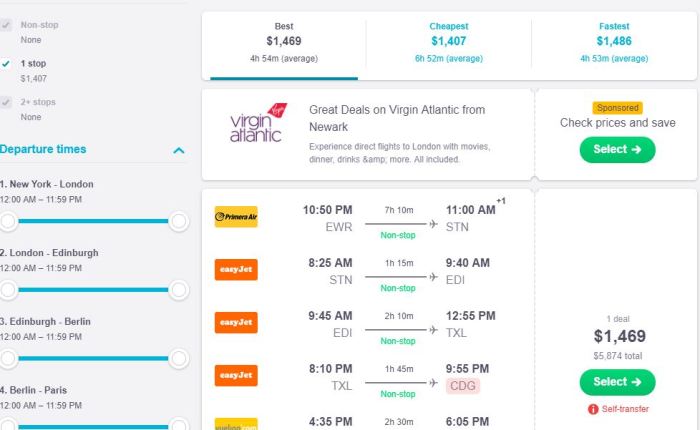
Planning a multi-city trip doesn’t have to break the bank. With careful planning and a few smart strategies, you can explore multiple destinations without sacrificing your financial well-being. This section provides practical tips and examples to help you keep your travel budget in check.
Budget-Friendly Accommodation Options
Choosing the right accommodation significantly impacts your overall travel costs. Consider these alternatives to expensive hotels for a more budget-conscious trip.
- Hostels: Hostels offer dorm-style rooms and private rooms at significantly lower prices than hotels. They’re a great way to meet fellow travelers and often include communal spaces and kitchen facilities, allowing you to save on food costs.
- Budget Hotels: Many hotel chains offer budget-friendly options, often located slightly outside city centers. These hotels typically provide basic amenities at a fraction of the cost of luxury accommodations. Look for deals and discounts on booking websites.
- Airbnb: Airbnb offers a wide range of options, from private rooms to entire apartments. This can be a cost-effective alternative to hotels, particularly for longer stays or groups traveling together. Look for apartments slightly outside the city center to save money.
- Guest Houses: Guest houses offer a more personalized experience than hotels and often come with lower prices. They are frequently family-run businesses, providing a local touch to your travel experience.
- Couchsurfing: For the adventurous traveler, couchsurfing offers free accommodation by staying with locals. This provides an immersive cultural experience and significantly reduces accommodation costs. Remember to thoroughly research hosts and prioritize safety.
Money-Saving Tips for Food and Activities
Food and activities can quickly eat into your travel budget. Employing smart strategies can help you save significantly.
- Grocery Shopping: Purchasing groceries for some meals allows you to avoid expensive restaurant bills. Many hostels and Airbnbs offer kitchen facilities, making this option even more convenient.
- Local Markets and Street Food: Local markets and street food vendors often offer delicious and affordable meals. This is a great way to experience the local culture and save money compared to tourist-oriented restaurants.
- Free Activities: Many cities offer free activities, such as walking tours, parks, museums on free days, and exploring neighborhoods. Researching free activities beforehand can save you considerable money.
- Take Advantage of Free Wi-Fi: Avoid roaming charges by utilizing free Wi-Fi hotspots available at cafes, libraries, and many public spaces.
- Pack Snacks and Drinks: Bringing your own snacks and water bottles can help you avoid impulsive purchases and save money throughout the day.
Minimizing Transportation Costs, Strategies for Booking Multi-City Flights Cheaply
Transportation costs can add up quickly during a multi-city trip. Here are several strategies to keep these costs down.
- Public Transportation: Utilize public transportation whenever possible, such as buses, trains, and subways. Many cities offer day passes or multi-day passes that provide significant savings compared to individual tickets.
- Walking and Cycling: Walking or cycling is a great way to explore a city at your own pace and save money on transportation. It also offers a more immersive experience.
- Ride-Sharing Apps: Consider using ride-sharing apps strategically, particularly for longer distances or late-night travel. Compare prices with public transportation options before committing.
- Book Transportation in Advance: Booking train tickets or bus passes in advance often leads to lower prices, especially during peak seasons.
- Consider Budget Airlines: When flying between cities, consider budget airlines for shorter distances. However, be mindful of baggage fees and other potential add-on costs.
Sample Multi-City Trip Budget
This sample budget is for a 10-day trip for one person to three European cities (e.g., Paris, Rome, and Barcelona). Adjust the figures based on your chosen destinations and travel style.
| Category | Estimated Cost |
|---|---|
| Flights (Roundtrip) | $1000 |
| Accommodation (10 nights) | $500 (mix of hostels and budget hotels) |
| Food (10 days) | $300 (mix of grocery shopping and affordable meals) |
| Activities and Entrance Fees | $200 |
| Transportation (Local and Between Cities) | $200 |
| Total Estimated Cost | $2200 |
Planning a multi-city trip can seem daunting, but with the right strategies, securing affordable flights becomes achievable. By utilizing the techniques and insights shared in this guide, you can significantly reduce your travel costs while still enjoying a fulfilling experience. Remember to remain flexible with your travel dates, explore alternative transportation, and meticulously plan your budget. Armed with this knowledge, your next multi-city adventure is sure to be both memorable and budget-friendly.
Essential Questionnaire
What is the best time to book multi-city flights?
Generally, booking 2-3 months in advance offers a good balance between availability and price. However, this can vary depending on the route and time of year.
Can I use points or miles for multi-city flights?
Yes, many airlines and loyalty programs allow you to redeem points or miles for multi-city flights, often at a fixed rate per segment.
How do I handle potential flight cancellations or delays in a multi-city itinerary?
Purchase travel insurance to protect against unforeseen circumstances. Familiarize yourself with the airlines’ cancellation and delay policies before your trip.
Are there any apps or websites specifically designed for multi-city flight searches?
While most major flight comparison websites handle multi-city searches, some specialized travel apps may offer additional features or deals.